
Sniffing Out the Truth: The Unregulated World of K9 Security & Detection
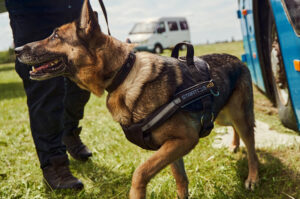
When you think about security at high-stakes environments—airports, stadiums, concerts, schools—you assume the teams in charge of detecting threats like explosives, narcotics, or firearms are highly trained and strictly regulated. And in some government agencies, like the TSA or certain branches of law enforcement, that’s true. But in the private sector, where detection dogs are increasingly being deployed, the reality is far different—and far more dangerous.
Despite the life-or-death nature of this work, the private K9 detection industry operates with virtually no oversight. There’s no federal licensing authority, no nationally mandated standards for training or certification, and no universal benchmark for what constitutes a reliable detection dog team. In practice, that means anyone can call themselves a K9 handler, start a company, and market their dogs as fully operational—without ever having to prove they’re effective.
This lack of accountability creates serious risks. When a dog falsely alerts, it can result in innocent people being searched or detained, entire venues being evacuated unnecessarily, and in the worst-case scenario, a real threat being overlooked. A 2011 study published in Animal Cognition found that false alerts can occur in up to 75% of cases, often because of handler influence, poor training methods, or environmental contamination. And while government K9 teams must be regularly recertified by outside agencies, most private companies either skip evaluations altogether or conduct them internally—meaning there’s no independent verification of accuracy or performance.
The consequences don’t stop at public safety. Inaccurate K9 teams expose clients—whether it’s a school, stadium, or corporate campus—to legal liability. A false narcotics alert can lead to unlawful searches, civil rights violations, and lawsuits. The dogs themselves are also at risk. In the absence of enforced welfare standards, they may endure outdated training methods, lack proper rest, or suffer from inadequate care—issues that have led to criminal investigations in more than one case.
This is exactly why I founded Stratos K9. After more than three decades working in military, law enforcement, and federal K9 programs, I knew what proper training and evaluation should look like—and I saw the gap in the private sector. Stratos K9 was built to close that gap. We listened to what clients actually need: reliable dogs, professional handlers, real metrics, and peace of mind.
Here’s what we do differently:
- 90%+ accuracy and less than 10% false alerts, meeting the highest national benchmarks
- Third-party, double-blind testing every six months—never internal-only evaluations
- Detailed, transparent documentation of every dog, handler, and operational activity
- Integrated tech tools that enhance detection accuracy and provide real-time decision support
- Ethical training and care based on positive reinforcement and customized cognitive approaches
- Mandatory retraining—if a team fails, they don’t deploy until they pass again
We’re not interested in shortcuts or empty promises. At Stratos K9, we require performance to be measurable and verifiable—and we treat every dog with the care and respect they deserve.
I’m the first to admit that this industry still has a long way to go. Until national standards are mandated, companies like Stratos K9 must lead by example. We’re here to show that excellence, transparency, and ethics aren’t just marketing buzzwords—they’re the baseline for doing this job right.
Because when it comes to detection work, “good enough” just isn’t good enough.
For more information:
Visit www.StratosK9.com to learn more about our operational detection dog services and hiring opportunities.
Visit www.FordK9.com for professional handler education, online and in-person training programs, and certifications.
Let’s raise the standard—together.
—
Reference: Lit, L., Schweitzer, J. B., & Oberbauer, A. M. (2011). Handler beliefs affect scent detection dog outcomes. Animal Cognition, 14(3), 387–394.